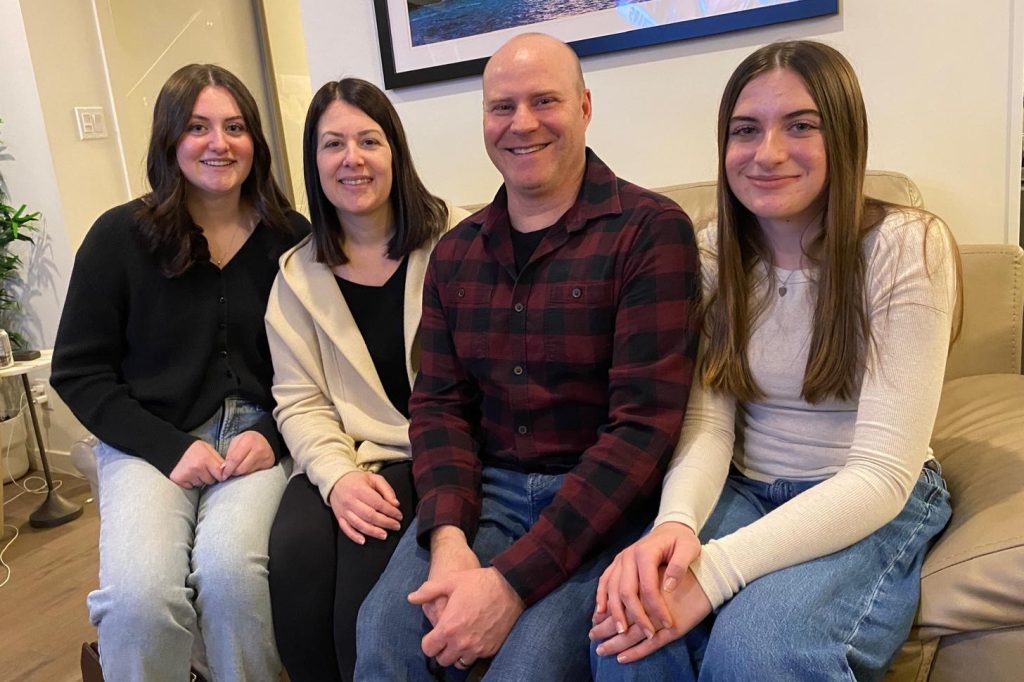
When Lianne and Michel first realized something wasn’t quite right with their daughter Cloé, they had no idea her care would one day mark a medical first in Manitoba.
At a young age, Cloé began experiencing episodes of vomiting and severe headaches. As the symptoms continued, they reached out for medical help, and she went through a series of tests.
The family soon learned that she had a brain tumour.
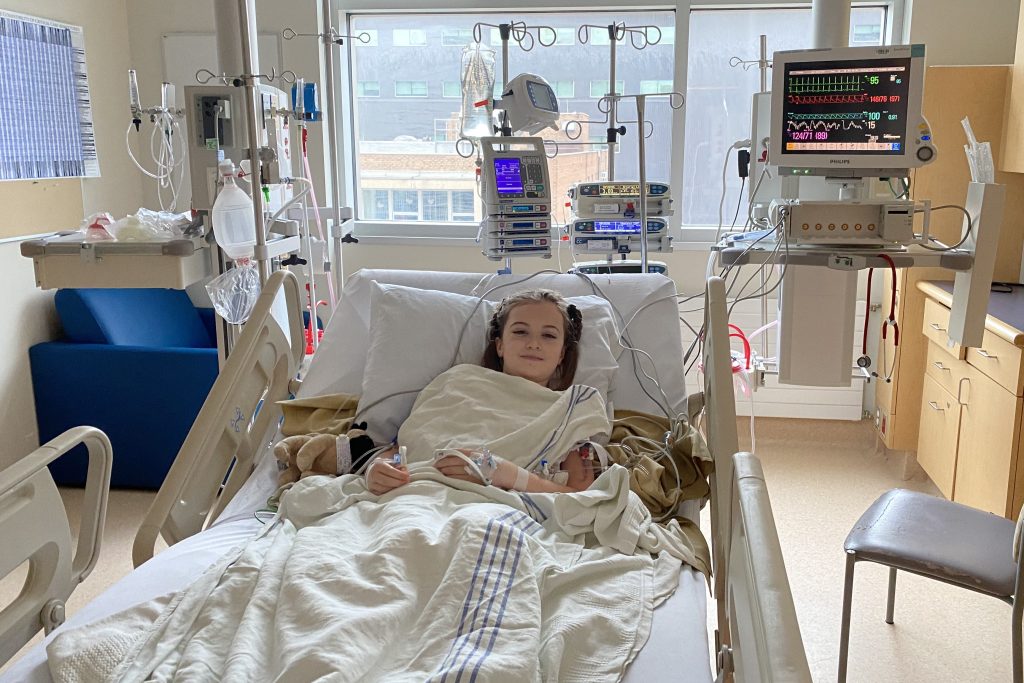
In June 2021, at nine years old, Cloé had surgery at HSC Children’s Hospital to remove it. For Lianne and Michel, the experience brought fear and helplessness, but they also remember the compassionate care their family received during some of the hardest moments.
“It is incredibly difficult to entrust your child to people you have just met and then wait for hours while they undergo surgery,” says Lianne. “The regular updates eased our worries and reminded us that Cloé was in caring and capable hands.”
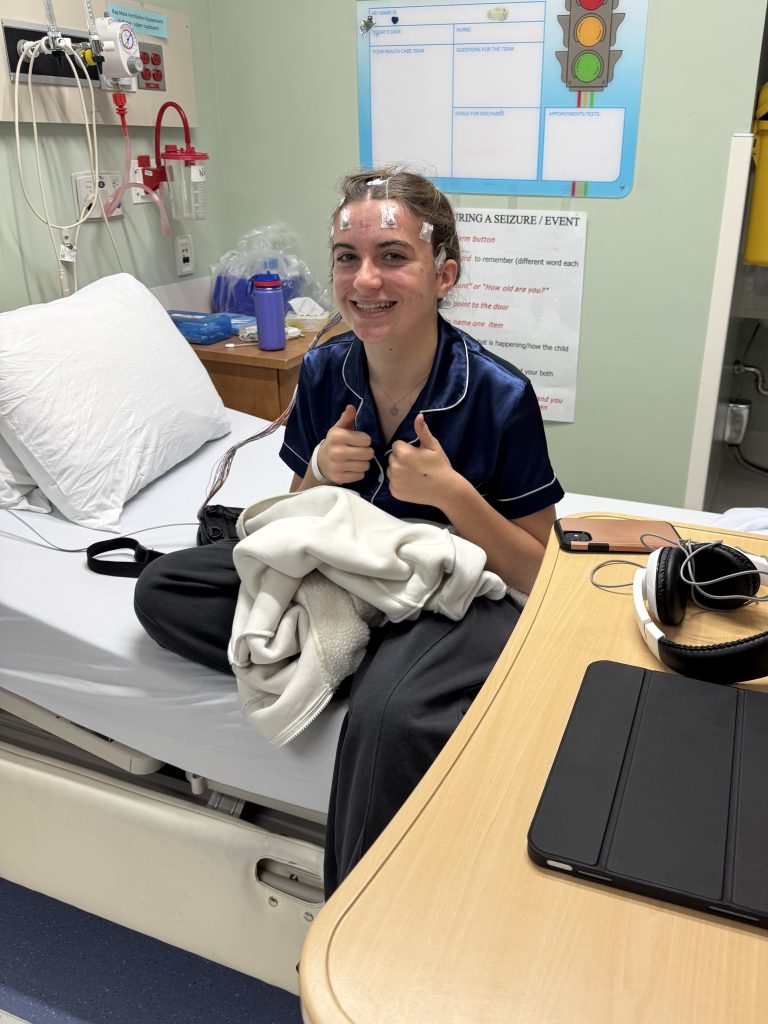
Cloé recovered well from surgery, and her most recent MRI shows no signs of the tumour returning. However, she was also experiencing focal seizures, which began in a separate area of her brain. Despite trying several antiseizure medications, her seizures were resistant to medication, and she continued to experience them each week.
To better understand where Cloé’s seizures were beginning and determine the safest treatment, her medical team recommended stereoelectroencephalography, or sEEG. She became the first patient in Manitoba to undergo the procedure.
sEEG is a minimally invasive diagnostic procedure used when scalp EEG, MRI and other tests cannot provide enough detail to safely plan treatment. Before the operation, the epilepsy and neurosurgical teams combined information from Cloé’s imaging, scalp EEG recordings, seizure symptoms and other testing to create an individualized plan for where each electrode should be placed.
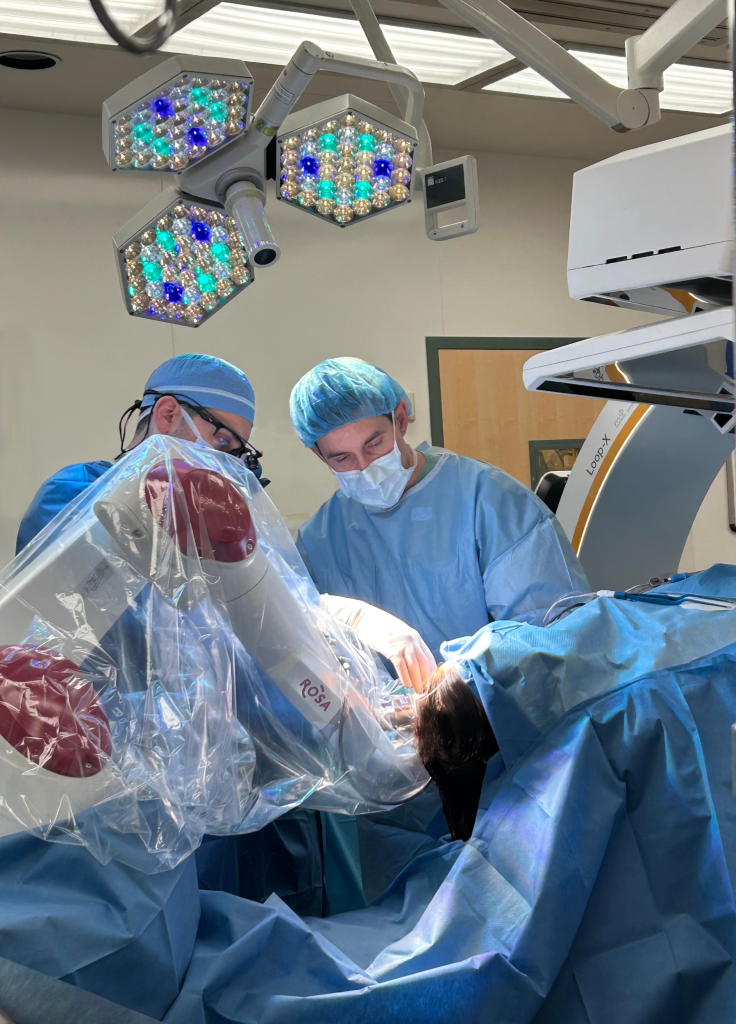
During the operation, epilepsy neurosurgeons Dr. Anton Fomenko and Dr. Patrick McDonald inserted small electrodes in carefully selected areas of her brain to record seizure activity.
The ROSA surgical robot, which was funded entirely by donors, helped the surgeons accurately guide the electrodes while avoiding blood vessels and other critical structures. Dr. Fomenko & Dr. McDonald also used the LoopX robotic CT scanner to obtain brain images before and after the procedure to confirm the electrodes were placed safely and accurately. This marked the first use of this robotic imaging technology in Canada.
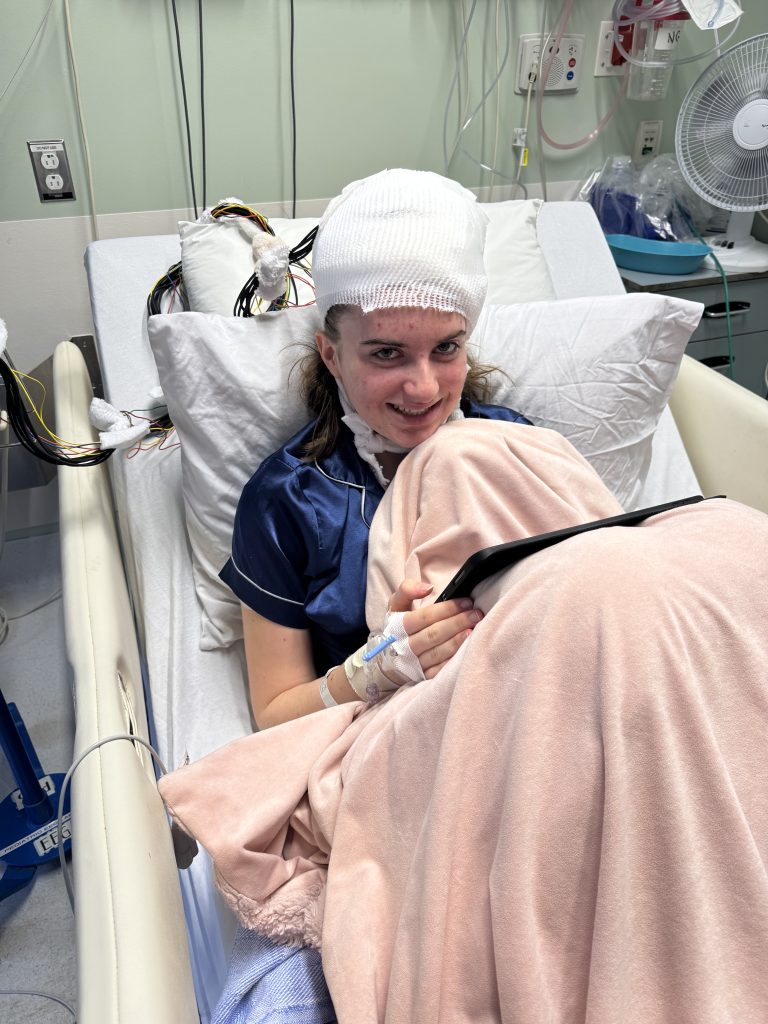
After implantation, Cloé was monitored in the Epilepsy Monitoring Unit. The electrodes recorded electrical activity directly from different regions of her brain over several days, allowing the team to capture seizures and study where they began and how they travelled through the brain.
Before sEEG became available in Manitoba, children who needed the procedure had to travel out of province for care. For Cloé’s family, having access to care close to home made a meaningful difference.
This first procedure represents more than a single technological milestone. It is an important step toward a comprehensive pediatric epilepsy surgery program in Manitoba—one that can evaluate children with the most complex forms of epilepsy and match them with the safest, most individualized treatment. Building this expertise locally also improves access and continuity of care for families who may otherwise need to leave the province during an already difficult time.
“Donations help make life-changing technology available to children who need it,” says Lianne. “As technology continues to advance, there are always new opportunities to improve care and outcomes. Many children still need access to these innovations, and every donation helps bring the latest tools and treatments within reach.”
The information gathered during Cloé’s admission helped guide the next step in her care. The team found that removing the tissue involved in her seizures could risk important brain functions. While there was no simple solution, they now had a clearer path forward.
The next step in Cloé’s care is implantation of a vagus nerve stimulator, or VNS, a device used to help reduce seizure activity without risking important brain function.
Through every stage of Cloé’s care, Lianne and Michel say they have been grateful for the many people who have supported their daughter.
“So many doctors have helped Cloé over the years,” says Lianne. “We are also deeply grateful to all the nurses we have encountered throughout her hospital stays. Each one has played an important role in her care. Through every step of this journey, we have always felt that Cloé was in good hands.”
After years of surgeries, tests and appointments, Cloé’s care continues close to home. Her family remains grateful for the medical teams, nurses and donors who have helped make that care possible.
About stereoelectroencephalography at HSC Children’s Hospital
Stereoelectroencephalography, or sEEG, is a specialized procedure that helps health care teams determine where a child’s seizures begin in the brain. It is used when tests such as scalp EEG and MRI cannot provide enough information to safely plan treatment.
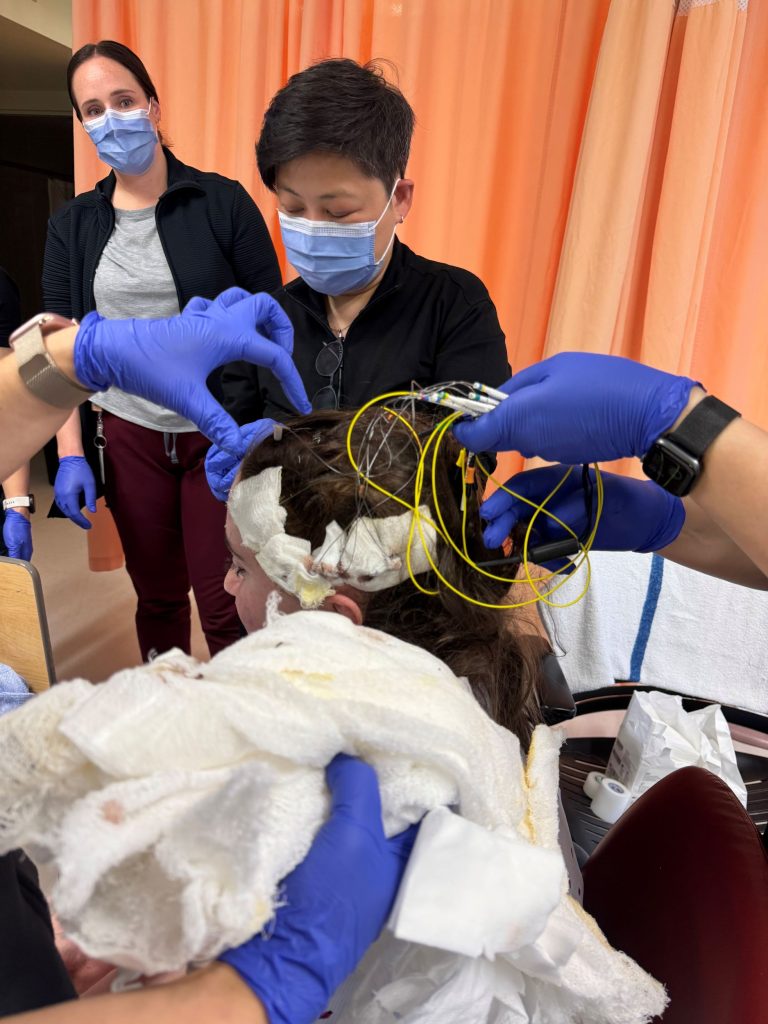
Unlike a standard EEG, which records electrical activity through sensors placed on the scalp, sEEG records activity directly from carefully selected areas inside the brain. This gives the epilepsy team a much clearer picture of where seizures start, how they spread and how they relate to areas responsible for important functions such as movement, sensation, vision and language.
“The analogy is that the seizures represent smoke from a fire,” says Andrew Dick, Physician Assistant at HSC Children’s Hospital. “A standard EEG can give you a postal code, but it’s not going to tell you the exact house, or the exact room the fire is coming from.”
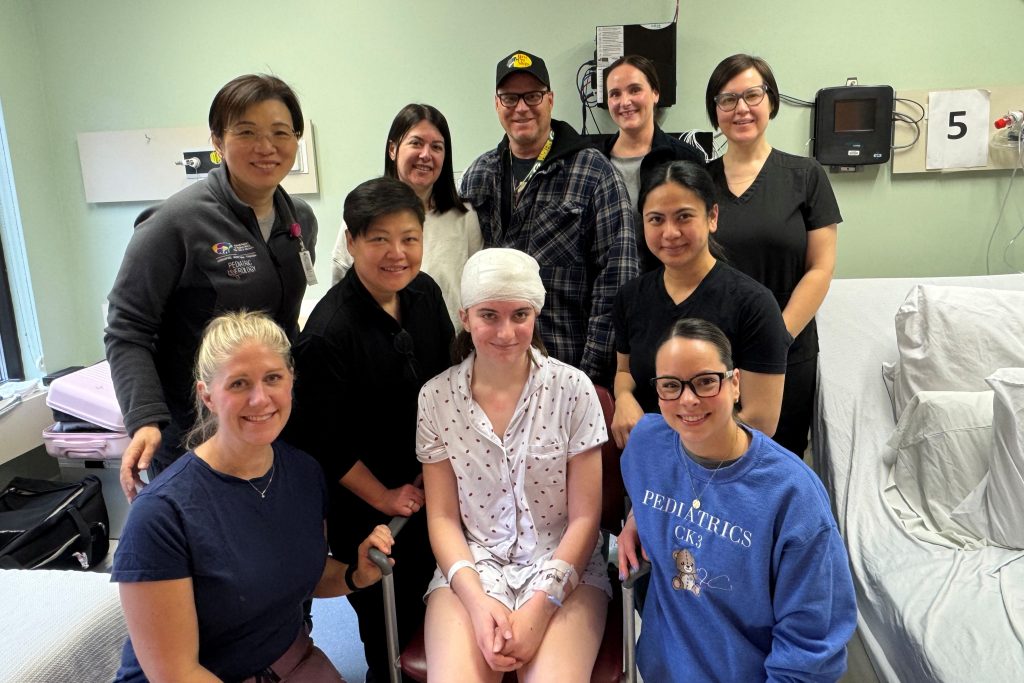
Performing the first sEEG procedure at HSC Children’s required a large multidisciplinary team of doctors, nurses, radiologists, surgeons, and other experts led by Pediatric Neurologist Dr. Qi (Helen) Xu. The ability to offer sEEG marks an important step forward for HSC Children’s Hospital’s Epilepsy Monitoring Unit (EMU) and for children across Manitoba, northwestern Ontario and Nunavut who need specialized epilepsy care.
“sEEG is like a 3D EEG. It gives us a much more detailed understanding of where seizures begin and how they spread. That information helps us recommend the safest and most effective treatment for each child,” says Dr. Qi (Helen) Xu.
The idea is that if doctors can find where the seizures are coming from, they can find better and more targeted treatment plans. This is especially important for kids like Emma and Cloé, whose epilepsy is resistant to medication.
In Manitoba, health care teams work closely with researchers to improve child health care. The knowledge gained through Manitoba’s first sEEG procedure will help inform future pediatric epilepsy research at the Children’s Hospital Research Institute of Manitoba, helping shape the future of epilepsy care for children.
Stay in touch!
Sign up for e-news to get updates on the latest events, news, and stories.
sign up for the newsletter